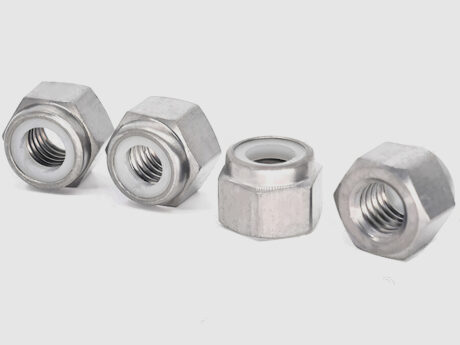
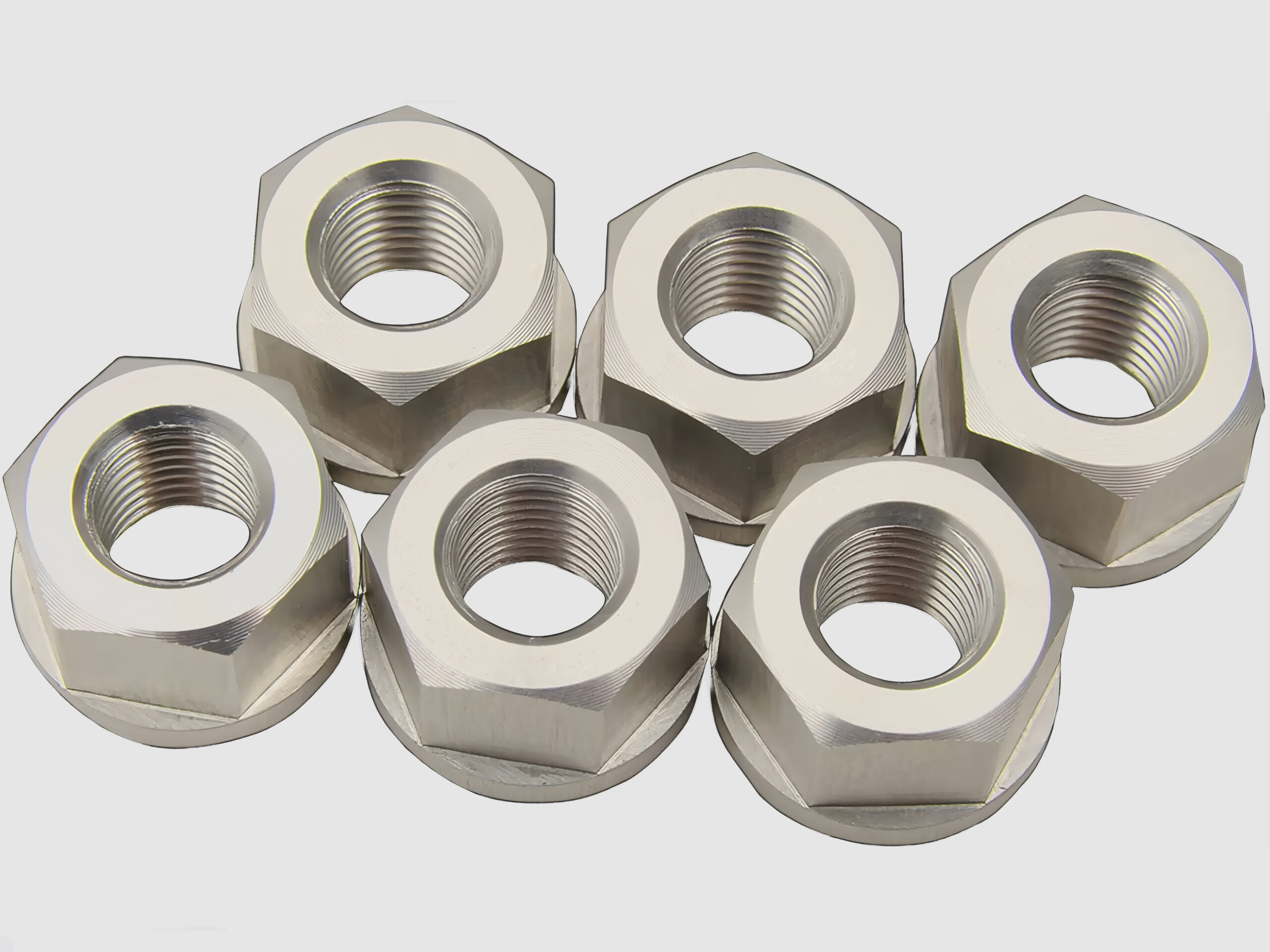
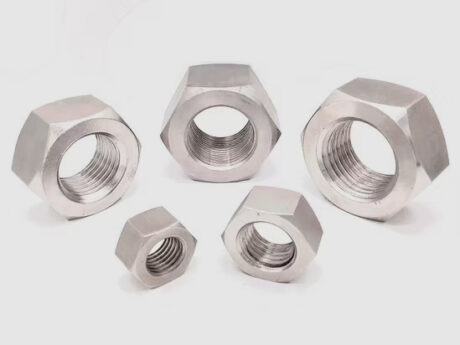
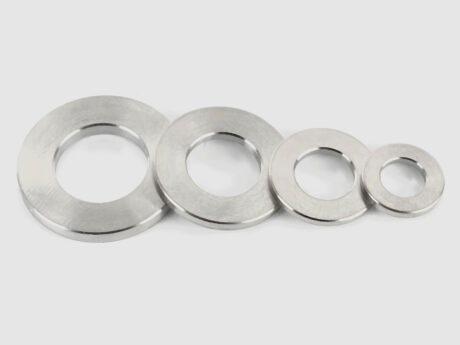
Titanium Flange Nut is a single-piece fastener that integrates a standard hex nut with a wide, flat circular flange at its base. This flange acts as a built-in, non-rotating washer, distributing the clamping force over a larger area than a standard nut, which helps to prevent damage to the mating surface and reduces loosening under vibration . These nuts are manufactured from commercially pure (CP) titanium or titanium alloys, renowned for their exceptional strength-to-weight ratio, superior corrosion resistance, and excellent performance in extreme temperatures .
📊 2. Material Grades, Chemical Composition & Mechanical Properties
Titanium flange nuts are available in various grades, each tailored for specific performance requirements. The table below details the chemical composition and key mechanical properties for the grades you specified.
Table 1: Chemical Composition (Weight %, max or range) & Mechanical Properties (min)
|
Grade
|
UNS Code
|
O (max)
|
Fe (max)
|
Al
|
V
|
Pd
|
Mo
|
Ni
|
Tensile Strength (MPa)
|
Yield Strength (MPa)
|
Elongation (%)
|
|---|---|---|---|---|---|---|---|---|---|---|---|
|
Grade 1
|
R50250
|
0.18
|
0.20
|
–
|
–
|
–
|
–
|
–
|
240
|
138
|
24
|
|
Grade 2
|
R50400
|
0.25
|
0.30
|
–
|
–
|
–
|
–
|
–
|
345
|
275
|
20
|
|
Grade 5
|
R56400
|
0.20
|
0.40
|
5.5-6.75
|
3.5-4.5
|
–
|
–
|
–
|
895
|
828
|
10
|
|
Grade 7
|
R52400
|
0.25
|
0.30
|
–
|
–
|
0.12-0.25
|
–
|
–
|
345
|
275
|
20
|
|
Grade 9
|
R56320
|
0.15
|
0.25
|
2.5-3.5
|
2.0-3.0
|
–
|
–
|
–
|
620
|
483
|
15
|
|
Grade 12
|
R53400
|
0.25
|
0.30
|
–
|
–
|
–
|
0.2-0.4
|
0.6-0.9
|
483
|
345
|
18
|
|
Grade 23
|
R56401
|
0.13
|
0.25
|
5.5-6.5
|
3.5-4.5
|
–
|
–
|
–
|
828
|
759
|
10
|
Grade Characteristics & Typical Applications
-
Grade 1 & 2 (Commercially Pure Titanium): Offer the best ductility, formability, and corrosion resistance among titanium grades. Grade 2 is the most widely used CP grade due to its excellent balance of strength and corrosion resistance, ideal for marine hardware and chemical processing equipment .
-
Grade 5 (Ti-6Al-4V): The most common titanium alloy, providing the highest strength-to-weight ratio. It is the preferred choice for aerospace frames, high-performance automotive systems, and critical mechanical applications .
-
Grade 7 (Ti-0.2Pd): The addition of palladium significantly enhances corrosion resistance, particularly in reducing acid environments like chemical processing plants .
-
Grade 9 (Ti-3Al-2.5V): Offers good cold formability and strength superior to CP titanium, often used in aircraft hydraulic tubing and bicycle components .
-
Grade 12 (Ti-0.3Mo-0.8Ni): Excellent resistance to crevice corrosion at elevated temperatures, suitable for heat exchangers and chemical vessels .
-
Grade 23 (Ti-6Al-4V ELI): An Extra-Low Interstitial (ELI) version of Grade 5, offering improved fracture toughness and ductility. It is the primary grade for medical implants and critical aerospace assemblies .
📏 3. Standards, Specifications & Dimensions
Titanium flange nuts conform to various international standards governing their dimensions, tolerances, and mechanical properties.
Table 2: Common Standards and Size Ranges
|
Standard
|
Title / Scope
|
Typical Size Range (Metric)
|
Typical Size Range (Imperial)
|
|---|---|---|---|
|
DIN 6923
|
Hexagon flange nuts
|
M5 – M20
|
–
|
|
DIN 6926
|
Hexagon flange nuts – High grade
|
M5 – M20
|
–
|
|
ISO 4161
|
Hexagon flange nuts – Product grades A and B
|
M5 – M20
|
1/4″ – 3/4″
|
|
ASME B18.2.2
|
Square and Hex Nuts (Inch Series)
|
–
|
#0 – 2 ½”
|
Example Dimensions (Based on DIN 6923 / 6926 for size M10) :
-
Thread Size (d): M10
-
Pitch (P): 1.5 mm
-
Width Across Flats (s): 15 mm (min 14.73 mm)
-
Flange Diameter (dc): ~21.8 mm (max)
-
Nut Height (m): 10 mm (max)
🛠️ 4. Manufacturing, Finishes, and Special Types
-
Forming Process: Typically manufactured via hot forging followed by CNC machining to achieve precise dimensions and thread profiles .
-
Surface Finishes:
-
Machined/Polished: Standard finish with a smooth, metallic appearance .
-
Anodizing: An electrochemical process that creates a durable, corrosion-resistant oxide layer available in various colors (e.g., blue, gold, purple, black) for identification and aesthetics .
-
PVD Coating: Provides a hard, wear-resistant, and decorative coating .
-
-
Special Types:
-
Nylock Flange Nut: Incorporates a nylon collar for superior vibration resistance .
-
12-Point Flange Nut: Allows for high-torque application in confined spaces, common in aerospace .
-
🚀 5. Key Advantages & Industry Applications
Summary of Advantages :
-
Lightweight: Approximately 40-45% lighter than steel nuts of comparable strength.
-
Corrosion Resistance: Exceptional resistance to seawater, chlorides, and a wide range of chemicals.
-
High Strength-to-Weight Ratio: Provides the strength of high-grade steel at a fraction of the weight.
-
Non-Magnetic: Essential for applications in MRI facilities, aerospace, and electronics.
-
Temperature Resistance: Suitable for use from cryogenic temperatures up to 400-600°C, depending on the grade.
Table 3: Typical Applications by Industry
|
Industry
|
Application Examples
|
Recommended Grade(s)
|
|---|---|---|
|
Aerospace & Defense
|
Aircraft structures, engine components, satellite assemblies
|
Grade 5, Grade 23
|
|
Marine & Offshore
|
Shipbuilding, offshore platforms, desalination plants
|
Grade 2, Grade 5, Grade 7
|
|
Chemical Processing
|
Reactors, pumps, valves, piping systems in corrosive environments
|
Grade 7, Grade 12
|
|
Medical
|
Surgical instruments, orthopedic implants, dental devices
|
Grade 2, Grade 23
|
|
Automotive (High-Performance)
|
Racing engines, suspension systems, lightweight body components
|
Grade 5, Grade 9
|
|
Energy
|
Nuclear reactors, wind turbines, geothermal power systems
|
Grade 5, Grade 7
|
⚠️ 6. Selection and Usage Considerations
-
Galling Tendency: Titanium fasteners are prone to galling (cold welding). It is crucial to use proper lubrication (e.g., anti-seize compounds) during installation .
-
Galvanic Corrosion: When connected to aluminum or steel in a corrosive environment, titanium can accelerate the corrosion of the other metal. Insulating washers or sleeves are recommended to prevent this .
-
Torque Values: Due to different friction coefficients, torque values for steel fasteners are not directly applicable. Always consult manufacturer-specific torque tables for titanium