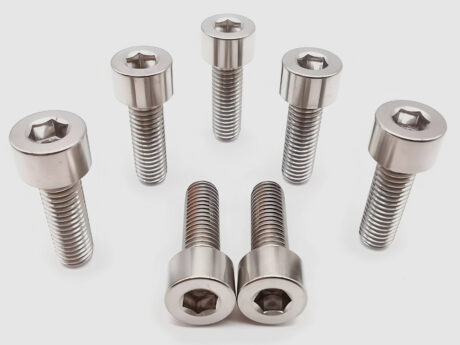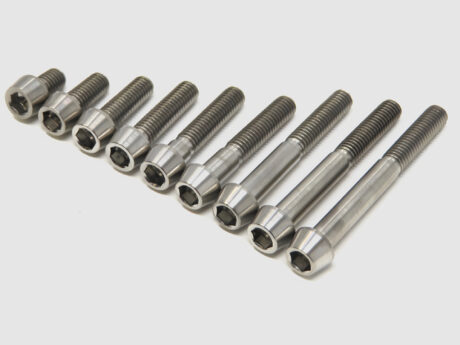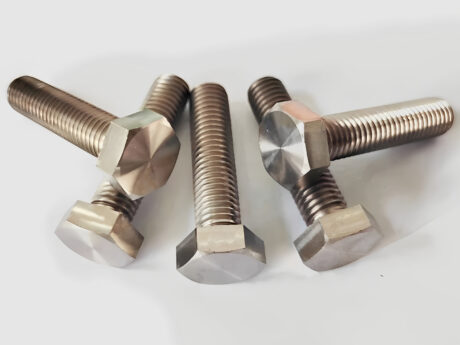
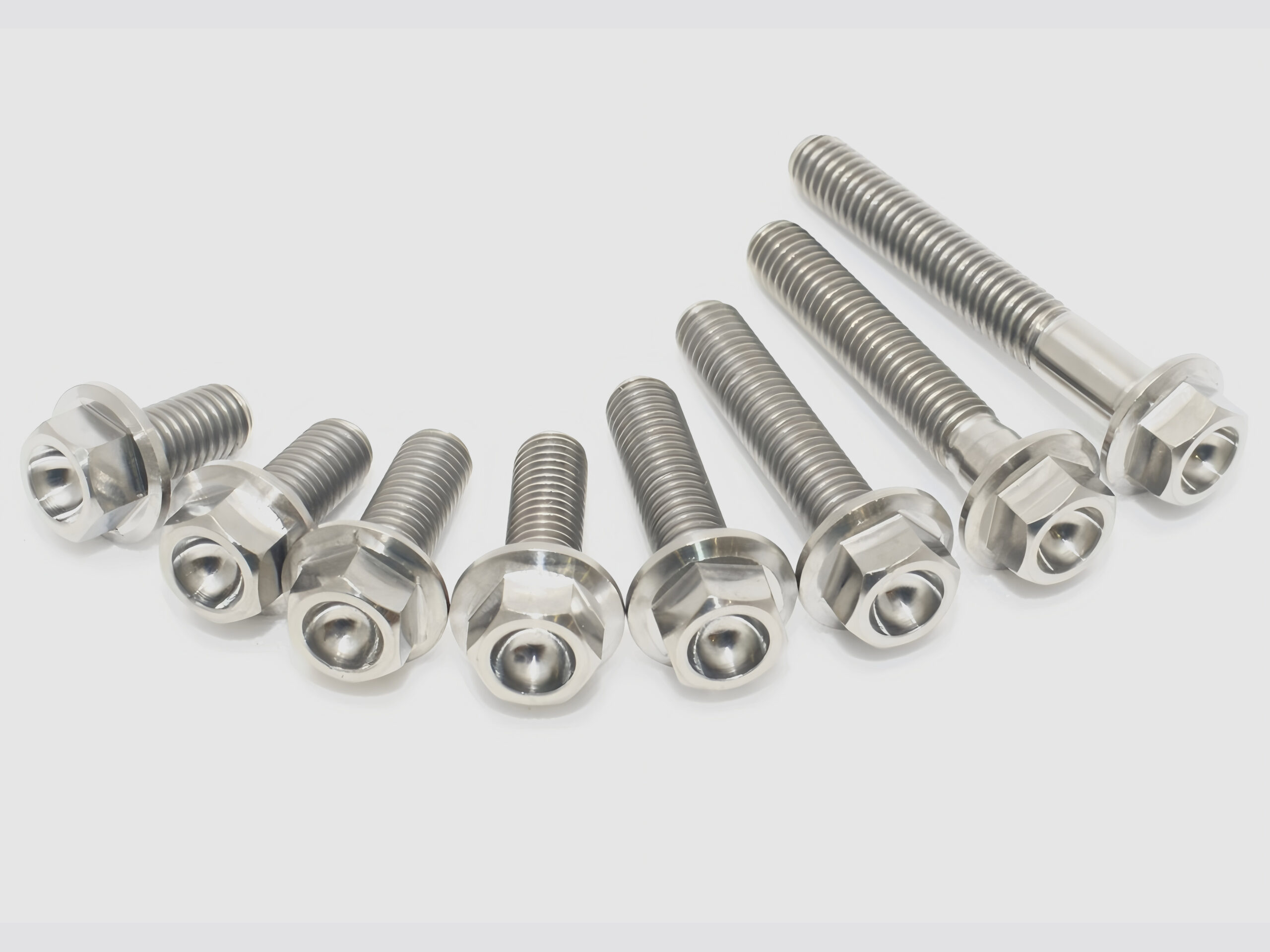
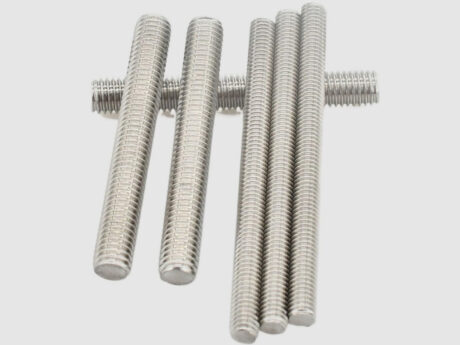
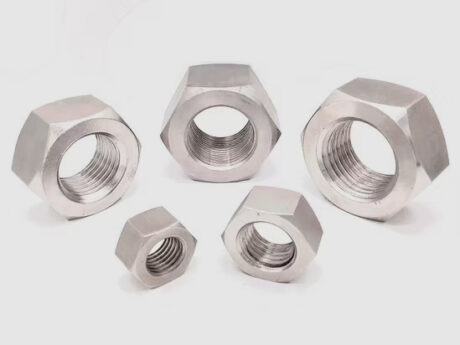
Titanium Hex Flange Bolts (DIN 6921 / ISO 4162) are high-performance fasteners renowned for their exceptional strength-to-weight ratio, outstanding corrosion resistance, and reliability in demanding environments. The integral flange beneath the hexagon head distributes clamping pressure over a wider area, often eliminating the need for a separate washer and providing superior anti-loosening performance .
Material Grades and Key Properties
Titanium bolts are available in various grades, each tailored for specific operational requirements. The mechanical properties of common grades are summarized below .
|
Grade
|
UNS Number
|
Typical Composition (Key Elements)
|
Tensile Strength (min, MPa)
|
Yield Strength (min, MPa)
|
Key Characteristics & Typical Applications
|
|---|---|---|---|---|---|
|
Grade 1
|
R50250
|
Unalloyed Ti (softest)
|
240
|
138
|
Excellent ductility and formability. Superior corrosion resistance for chemical processing .
|
|
Grade 2
|
R50400
|
Unalloyed Ti (standard)
|
345
|
275
|
The most common grade for industrial applications. Good balance of strength and ductility .
|
|
Grade 5 (Ti-6Al-4V)
|
R56400
|
Ti, 6% Al, 4% V
|
895
|
828
|
The most widely used titanium alloy. High strength, suitable for aerospace and high-stress applications .
|
|
Grade 7
|
R52400
|
Ti, 0.2% Pd
|
345
|
275
|
Enhanced corrosion resistance, especially in reducing acids. Used in chemical process industries .
|
|
Grade 9 (Ti-3Al-2.5V)
|
R56320
|
Ti, 3% Al, 2.5% V
|
620
|
483
|
Good formability and strength. Often used in tubing and some aerospace fasteners .
|
|
Grade 12 (Ti-0.3Mo-0.8Ni)
|
R53400
|
Ti, 0.3% Mo, 0.8% Ni
|
483
|
345
|
Excellent corrosion resistance in high temperatures and crevice conditions .
|
|
Grade 23 (Ti-6Al-4V ELI)
|
R56401
|
Ti, 6% Al, 4% V (Extra Low Interstitial)
|
828
|
759
|
High strength with improved fracture toughness. Biocompatible, ideal for medical implants and critical aerospace .
|
Universal Material Advantages:
-
Lightweight: Density of approximately 4.51 g/cm³, about 60% of steel .
-
Corrosion Resistance: Exceptional resistance to a wide range of corrosive media, including seawater, chlorides, and many chemicals .
-
High-Temperature Resistance: Capable of maintaining mechanical properties at elevated temperatures (some grades up to 600°C for short periods) .
-
Non-Magnetic: Essential for applications in medical (e.g., MRI machines), aerospace, and electronics industries .
-
Biocompatibility: Grades like Gr2, Gr5, and particularly Gr23 are biocompatible, making them suitable for medical implants and surgical tools .
Standards and Specifications
The primary standard for hex flange bolts is DIN 6921 . They also conform to other international standards such as:
-
ISO 4162
-
Other relevant standards: GB, ANSI, ASME, JIS .
Specifications and Dimensional Data
Typical specifications and a dimensional table for DIN 6921 flange bolts are provided below .
|
Thread Size (d)
|
Pitch (p)
|
Head Height (k) max
|
Hex Key Size (s) max
|
Flange Diameter (dc) max
|
|---|---|---|---|---|
|
M5
|
0.8
|
5.4 mm
|
8 mm
|
11.8 mm
|
|
M6
|
1
|
6.6 mm
|
10 mm
|
14.2 mm
|
|
M8
|
1 / 1.25
|
8.1 mm
|
13 mm
|
18 mm
|
|
M10
|
1 / 1.25 / 1.5
|
9.2 mm
|
15 mm
|
22.3 mm
|
|
M12
|
1 / 1.5 / 1.75
|
11.5 mm
|
16 mm
|
26.6 mm
|
|
M14
|
1.5 / 2
|
12.8 mm
|
18 mm
|
30.5 mm
|
|
M16
|
1.5 / 2
|
14.4 mm
|
21 mm
|
35 mm
|
|
M20
|
1.5 / 2.5
|
17.1 mm
|
27 mm
|
43 mm
|
Available Sizes: Commonly from M2 to M64 in diameter, with lengths customizable from 6mm to 300mm .
Thread Pitch: Available in standard metric coarse threads; fine threads are also an option .
Manufacturing and Customization
-
Process: Manufactured using CNC machining, cold heading, or hot forging to ensure dimensional accuracy and material integrity .
-
Surface Finish: Typically supplied with a polished (satin or mirror) finish. Other options include anodizing (various colors), black oxide, and PVD coating for enhanced aesthetics and additional corrosion resistance .
-
Customization: Manufacturers offer OEM services for custom lengths, diameters, thread types, logos, and packaging .
Application Areas
These bolts are critical in industries where performance, weight, and reliability are paramount :
-
Aerospace: Aircraft assembly, engine components, and structural applications.
-
Automotive/Motorcycling: High-performance vehicles, racing cars, and motorcycles (e.g., brake discs, engine components).
-
Marine & Offshore: Shipbuilding, desalination plants, and offshore structures due to exceptional saltwater resistance.
-
Chemical Processing: Reactors, piping, and equipment in corrosive chemical environments.
-
Medical: Surgical implants, dental components, and medical equipment (utilizing biocompatible grades like Gr23 and Gr5).
-
Sports & Recreation: High-end bicycles, motorcycles, and other equipment where weight reduction is critical.
Summary of Key Advantages
-
Integrated Flange Design: Provides a larger bearing surface, improving load distribution and resistance to vibration loosening .
-
High Strength-to-Weight Ratio: Critical for weight-sensitive applications like aerospace and automotive .
-
Exceptional Durability: Long service life even in harsh environments, offering a cost-effective solution despite a higher initial cost than steel .
-
Wide Operational Temperature Range: Performs reliably from cryogenic temperatures to high-heat environments .
Selection Considerations
When selecting a titanium hex flange bolt, consider:
-
Mechanical Load: Choose the grade (e.g., Gr5 for high strength) and diameter based on tensile and shear stress requirements .
-
Environmental Conditions: Select a grade with appropriate corrosion resistance (e.g., Gr7 for reducing acids, Gr2 for general industrial use) .
-
Temperature: Ensure the selected grade retains mechanical properties at the application’s operating temperature .
-
Regulatory Compliance: For critical applications, verify that the bolts meet required certifications (e.g., ISO 9001) and have relevant test reports .