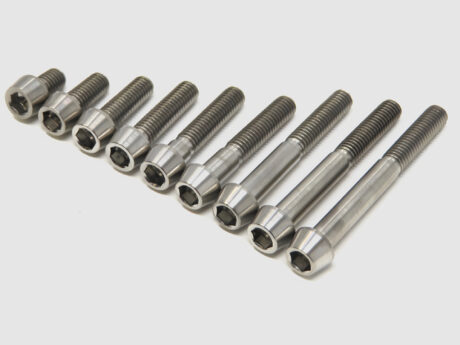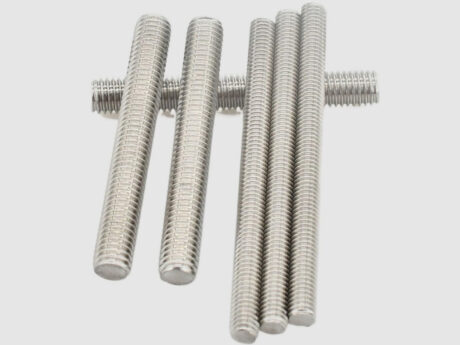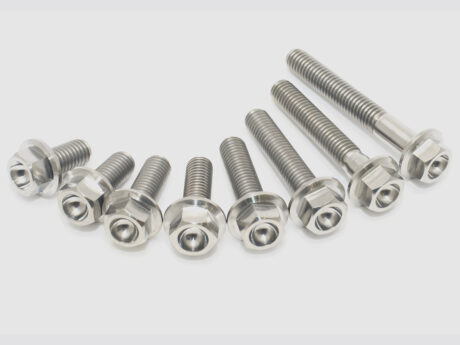
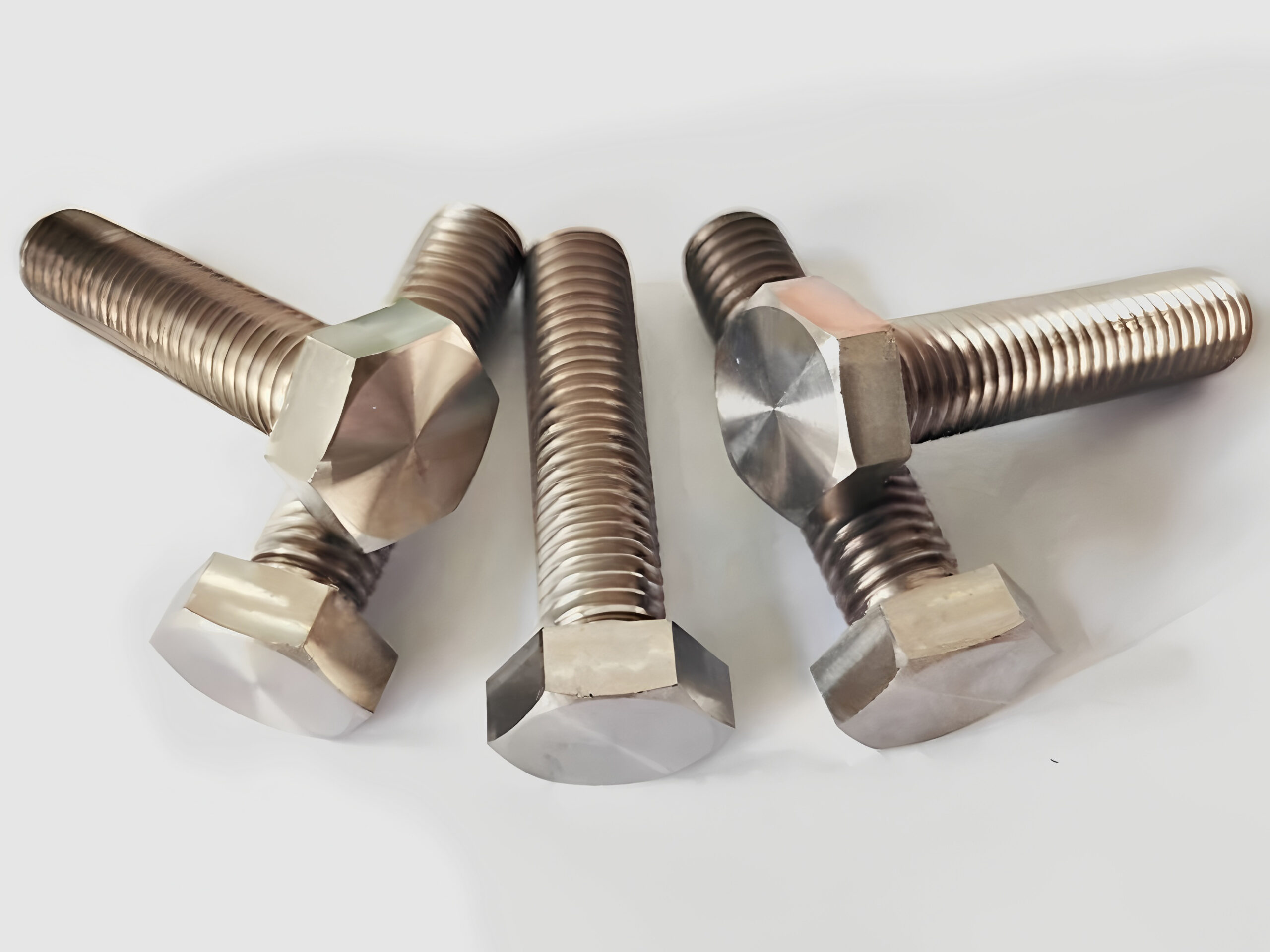
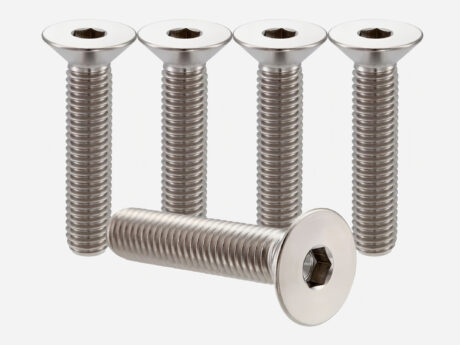
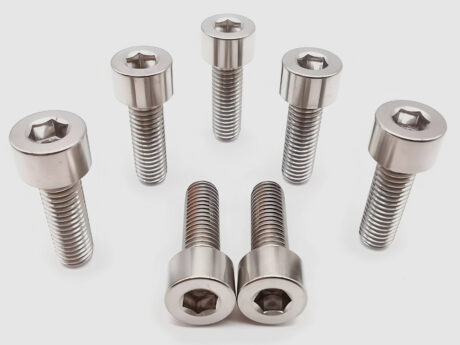
Titanium hex head bolts are high-performance fasteners renowned for their exceptional strength-to-weight ratio and superior corrosion resistance. They are critical in industries where reliability under extreme conditions is paramount, such as aerospace, marine engineering, chemical processing, and medical device manufacturing .
1 Material Grades and Properties
Titanium bolts are available in various grades, each offering a unique combination of mechanical properties, corrosion resistance, and suitability for specific environments. The following table provides a detailed overview of the key material grades.
Table: Mechanical Properties of Common Titanium Bolt Grades
|
Grade
|
Common Alloy Designation
|
Tensile Strength (min)
|
Yield Strength (min)
|
Elongation (%)
|
Primary Characteristics
|
|---|---|---|---|---|---|
|
Grade 1
|
Unalloyed
|
240 MPa / 35 ksi
|
138 MPa / 20 ksi
|
24
|
Excellent ductility and cold formability
|
|
Grade 2
|
Commercially Pure (CP)
|
345 MPa / 50 ksi
|
275 MPa / 40 ksi
|
20
|
Good strength and excellent corrosion resistance; most common CP grade
|
|
Grade 4
|
Commercially Pure (CP)
|
550 MPa / 483 ksi
|
483 MPa / 70 ksi
|
15
|
Highest strength of unalloyed grades
|
|
Grade 5
|
Ti-6Al-4V
|
895 MPa / 130 ksi
|
828 MPa / 120 ksi
|
10
|
Most widely used titanium alloy; high strength, heat treatable
|
|
Grade 7
|
Ti-0.15Pd
|
345 MPa / 50 ksi
|
275 MPa / 40 ksi
|
20
|
Similar to Gr2 but with enhanced corrosion resistance from Palladium addition
|
|
Grade 9
|
Ti-3Al-2.5V
|
620 MPa / 483 ksi
|
483 MPa / 70 ksi
|
15
|
Good cold-workability; used in higher temperature applications
|
|
Grade 12
|
Ti-0.8Ni-0.3Mo
|
483 MPa / 70 ksi
|
345 MPa / 50 ksi
|
18
|
Excellent corrosion resistance in a wide range of conditions
|
|
Grade 23
|
Ti-6Al-4V ELI
|
793 MPa / 759 ksi
|
759 MPa / 110 ksi
|
10
|
Extra Low Interstitial (ELI) version of Gr5; superior fracture toughness; bio-compatible
|
2 Technical Standards and Specifications
Titanium hex head bolts are manufactured to various international standards, which define their dimensions, tolerances, and mechanical performance. The choice of standard depends on the industry and application requirements.
-
General Industrial Standards: The most common standards for hex head bolts are DIN 931 (for partially threaded shanks) and DIN 933 (for fully threaded shanks) . These standards specify metric dimensions and are widely adopted across industries.
-
Aerospace Standards: The aerospace industry requires bolts with tighter tolerances and higher reliability. Key standards include:
-
AIA NAS 6409: Specifies close-tolerance, tension bolts made from 6AL-4V (Grade 5) titanium alloy with a tensile strength of 160 ksi (~1100 MPa) .
-
DIN 65177: Defines hexagon bolts with a waisted shank and MJ thread (a stronger, rounded root thread form) for aerospace applications, with a nominal tensile strength of 1100 MPa and a service temperature up to 315°C .
-
BS EN 4127 & DIN EN 4495: These European aerospace standards specify bolts with aluminum coatings (IVD or pigmented) for corrosion protection, classified for 1100 MPa at room temperature and elevated temperatures up to 425°C and 315°C, respectively .
-
3 Specifications and Dimensions
The specifications for titanium hex head bolts encompass a range of sizes, head styles, and surface treatments.
-
Thread Size and Length: Commercially available metric thread sizes typically range from as small as M1.6 up to M160 or larger for custom orders. Standard lengths can vary from around 10mm to 345mm .
-
Head Dimensions: The head size (width across flats, ‘S’) and thickness (‘K’) are standardized according to norms like DIN 931/933. For example, an M8 bolt has a standard head width (S) of 13mm and a thickness (K) of 5.3mm .
-
Drive Style: Features an external hex head, allowing for installation and removal using standard wrenches or sockets. This design offers a good balance of torque capacity and cost-effectiveness .
-
Surface Treatment: Various finishes are available to enhance appearance or performance, including:
-
Polishing
-
Anodizing (which can produce colors like black, blue, gold, purple, green, and rainbow)
-
Pickling
-
PVD (Physical Vapor Deposition) Coating
-
4 Key Features and Advantages
The unique properties of titanium impart several distinct advantages to these fasteners.
-
High Strength-to-Weight Ratio: Titanium is as strong as many steel grades but about 40% lighter, making it ideal for weight-critical applications like aerospace and high-performance automobiles .
-
Exceptional Corrosion Resistance: These bolts exhibit outstanding resistance to a wide range of corrosive media, including saltwater, chlorides, and many chemicals. This makes them indispensable for marine, offshore, and chemical processing industries .
-
High-Temperature Performance: Titanium alloys retain their mechanical properties at elevated temperatures, with some grades suitable for continuous use at temperatures up to 600°C .
-
Biocompatibility: Certain grades, particularly Grade 23 (Ti-6Al-4V ELI), are non-toxic and biocompatible, making them the standard choice for medical implants and surgical instruments .
5 Application Areas
Titanium hex head bolts are specified for demanding applications across diverse sectors.
-
Aerospace & Aviation: Used in airframes, engine components, and structural parts due to their light weight and high strength .
-
Marine & Offshore Engineering: Ideal for ships, submarines, and offshore platforms because of their exceptional resistance to seawater corrosion .
-
Chemical & Process Industries: Suitable for reactors, pipes, and equipment handling corrosive chemicals .
-
Medical Industry: Used in surgical instruments, implants, and MRI equipment (due to being non-magnetic) .
-
Automotive Racing & High-Performance Bicycles: Reduce weight while maintaining strength, leading to improved performance .
In summary, selecting the appropriate titanium hex head bolt requires careful consideration of the material grade against mechanical and corrosion requirements, adherence to the correct industry standard for dimensional and quality control, and specification of the appropriate size and finish for the application.